Introduction
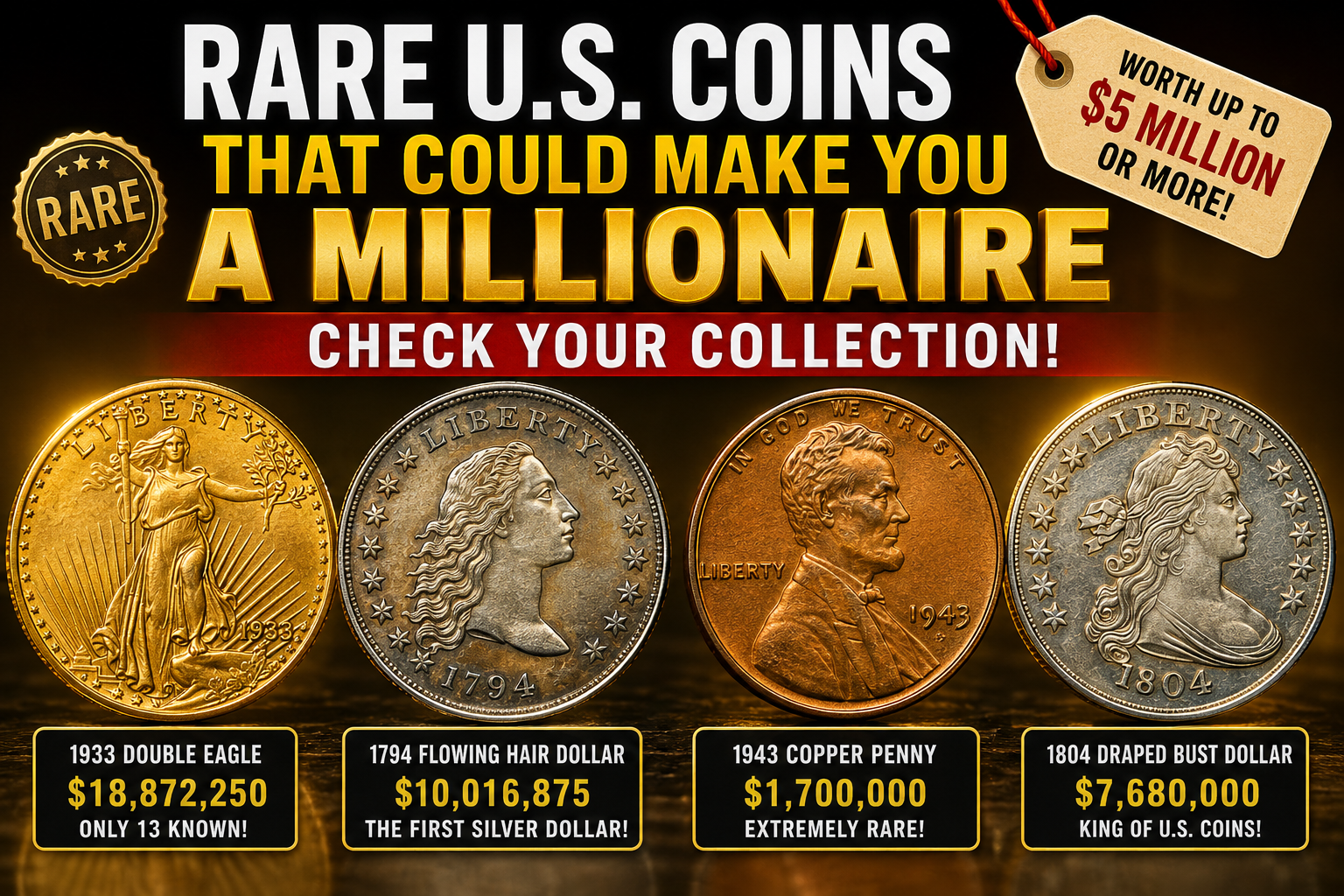
Rare U.S. coins have become some of the most fascinating and valuable collectibles in the world. While most coins found in old jars, albums, and inherited collections are worth modest amounts, a handful of genuinely scarce pieces have sold for millions of dollars. Their value usually comes from a combination of rarity, condition, historical importance, provenance, and collector demand. That means an unusual-looking coin should not automatically be considered a fortune, but it may deserve closer examination. Here are four famous U.S. rarities that demonstrate just how valuable the right coin can become.
1. 1794 Flowing Hair Silver Dollar
The 1794 Flowing Hair Silver Dollar is one of the most important coins in American numismatic history. It comes from the earliest period of federal U.S. coin production, giving surviving examples enormous historical significance. The finest-known specimens have attracted extraordinary attention from collectors and have reached multimillion-dollar prices at auction. A genuine 1794 dollar discovered in an old collection would therefore deserve immediate professional attention. However, collectors should be cautious when identifying one because replicas and altered coins exist. The date alone is not enough to establish authenticity or value. Specialists examine the coin’s design details, surfaces, weight, die characteristics, condition, and provenance before determining whether it is genuine.
2. 1933 Saint-Gaudens Double Eagle
The 1933 Saint-Gaudens Double Eagle is another legendary U.S. rarity whose history is unusually complicated. Although the U.S. Mint produced a large number of these gold coins, they were not released for ordinary circulation following changes involving the nation’s gold currency system. Most were melted, while a very small number escaped into private hands. One example that received official authorization for private ownership later achieved an exceptional auction price. Because of the unusual legal and historical background surrounding the issue, anyone who believes they have discovered a 1933 Double Eagle should not attempt to sell it casually. Professional authentication and legal guidance would be essential. Its story shows why provenance and ownership history can matter just as much as rarity.
3. 1804 Draped Bust Silver Dollar
The 1804 Draped Bust Silver Dollar is among the most famous American numismatic rarities, but its story is more complicated than its date suggests. The best-known examples were struck years after 1804 as presentation pieces, even though they carry the 1804 date. Collectors generally classify the known coins into three major groups, and only a limited number are known to exist. Their combination of rarity, historical interest, and famous ownership histories has made them highly desirable. Some examples have sold for millions, although prices vary depending on the specific specimen and its condition. Anyone discovering an apparent 1804 dollar should have it examined professionally because the coin’s fame has also made it a target for counterfeiting.
4. 1913 Liberty Head Nickel
The 1913 Liberty Head Nickel is one of the most recognizable rarities in American coin collecting. Only five examples are generally accepted as genuine, making the coin exceptionally scarce. Its mysterious origins have added to its appeal, since Liberty Head nickels were not officially expected to bear the 1913 date. Over the years, the known examples have passed through major collections and appeared in important auctions, sometimes producing multimillion-dollar results. The coin’s story also demonstrates why collectors should pay close attention to seemingly ordinary denominations. A nickel can be worth an extraordinary amount when its rarity and historical significance are established. Any suspected example would require expert authentication because its extreme value makes it a natural target for sophisticated counterfeits.
Conclusion
The four coins above—the 1794 Flowing Hair Silver Dollar, 1933 Saint-Gaudens Double Eagle, 1804 Draped Bust Silver Dollar, and 1913 Liberty Head Nickel—represent some of the most famous and valuable rarities in U.S. numismatics. Finding one in a typical collection would be extraordinarily unlikely, but these coins show why experienced collectors examine unusual pieces carefully. A coin’s age or appearance alone does not make it worth millions. Authenticity, rarity, condition, provenance, and documented market demand are critical. If you believe an old coin in your collection could be a major rarity, avoid cleaning or altering it and seek an evaluation from a reputable numismatist or professional grading service before making any assumptions about its value.
FAQ
Can these coins really make someone a millionaire?
Authentic examples of some of these rare U.S. coins have sold for millions of dollars. However, they are exceptionally scarce, and finding one in an ordinary collection would be extremely unusual.
What is the most important factor when valuing a rare coin?
There is no single factor that determines value. Rarity, authenticity, condition, historical significance, provenance, and current collector demand can all influence the final market price.
Should I clean an old coin before getting it appraised?
No. Cleaning or polishing can damage the original surfaces and potentially reduce the coin’s collectible value. A potentially rare coin should generally be left in its existing condition.
How can I determine whether my coin is genuine?
Professional authentication is the safest approach for a potentially valuable rarity. Established grading services and experienced numismatists can examine the coin’s physical characteristics and compare it with known genuine examples.
Are online coin prices accurate?
Not necessarily. Online listings often show asking prices rather than completed transactions. For a realistic valuation, collectors should look for documented auction results and assessments from reputable professionals.
What should I do if I discover a potentially rare U.S. coin?
Handle it carefully, avoid cleaning or modifying it, document what you know about its history, and contact a reputable coin expert or professional authentication and grading service for further evaluation.

Prakash Kumar is a seasoned journalist and storyteller with 12 years of experience creating clear, engaging news content for digital audiences. His reporting spans automobile launches, emerging technology, consumer gadgets, health and diet tips, and everyday lifestyle trends. Known for turning complex information into useful, reader-friendly stories, Prakash combines careful research with a sharp editorial eye. He follows industry developments closely, interviews experts, and delivers timely articles that help readers make informed choices. Whether covering a new car, a smart device, or practical nutrition advice, Prakash brings accuracy, curiosity, and approachable writing to every story he publishes for news readers.
Leave a Reply