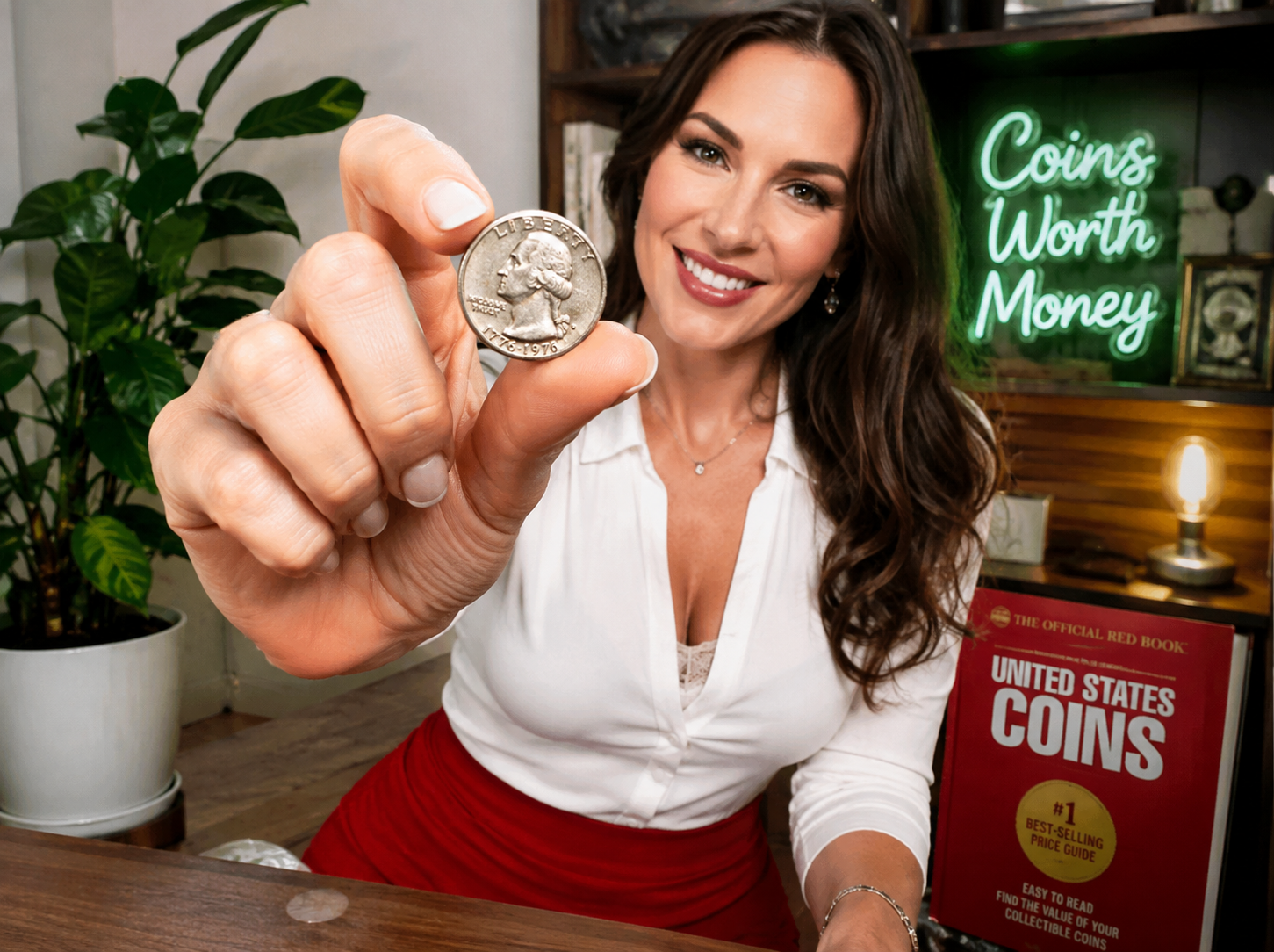
The Bicentennial Quarter is one of the most recognizable coins in American history. Released in 1975 and 1976 to celebrate the 200th anniversary of American independence, the coin carries the special dual date 1776–1976 and features a colonial drummer on its reverse. In recent years, sensational online stories have claimed that an extraordinarily rare Bicentennial Quarter could be worth as much as $40 million. While there is no widely documented auction evidence confirming a Bicentennial Quarter selling for $40 million, unusual examples can still attract collectors. Rare errors, special compositions, exceptional preservation, and unusual varieties are among the features that can make these coins interesting.
1. The $40 Million Bicentennial Quarter Claim
The idea of finding a $40 million Bicentennial Quarter is certainly exciting, but collectors should approach this extraordinary claim carefully. There is no widely recognized public auction record establishing an ordinary 1776–1976 quarter at that valuation. Extremely high coin prices require credible documentation, professional authentication, and evidence of an actual completed transaction. Nevertheless, the headline highlights an important fact: some unusual coins can become surprisingly valuable when genuine rarity and strong collector demand come together.
2. Major Mint Errors Could Make a Bicentennial Quarter Special
One of the most interesting possibilities involves a significant minting error. During production, coins can occasionally receive unusual strikes, incorrect planchets, doubled details, dramatic off-center strikes, or other manufacturing abnormalities. A genuine and substantial error can make a normally common coin much more desirable to collectors. However, not every unusual mark represents a mint error. Scratches, dents, discoloration, corrosion, and damage caused after leaving the Mint generally do not carry the same collectible importance. Professional authentication is therefore essential before assigning a substantial value.
3. Silver Bicentennial Quarters Have Additional Collector Appeal
The United States Mint produced special Bicentennial Quarters containing 40% silver for collectors, while regular circulation examples used copper-nickel clad compositions. This difference can make certain Bicentennial Quarters more interesting to collectors and investors. Silver examples should not automatically be considered extremely rare or worth millions, however. Their actual value depends on factors including condition, specific issue, rarity, certification, and collector demand. Anyone who believes they have a special silver example should verify its composition and issue rather than relying solely on appearance or online descriptions.
4. Condition Can Dramatically Affect Collectible Value
The physical condition of a coin is an important part of determining its collectible desirability. A Bicentennial Quarter with sharp design details, strong original surfaces, attractive luster, and very few marks can be considerably more desirable than a heavily circulated example. Professional grading companies evaluate coins using standardized grading systems, allowing collectors to compare quality more consistently. An exceptionally high-grade specimen can attract significant attention when combined with rarity or an important variety. Still, excellent condition by itself does not justify a $40 million valuation.
5. Rare Varieties Can Become Collector Favorites
Collectors often examine coins carefully for recognized varieties involving dies, lettering, design details, mint marks, and other production characteristics. If a particular variety is genuinely scarce and recognized by specialists, examples can command premiums compared with ordinary coins. Bicentennial Quarters are especially interesting because several different issues and compositions were produced during the commemorative program. Identifying a genuine variety requires careful research and sometimes professional examination. Collectors should always verify that an alleged variety is documented before assuming that it represents a rare multimillion-dollar discovery.
6. A Genuine Discovery Would Need Professional Authentication
If someone discovers a Bicentennial Quarter that appears extraordinarily unusual, professional authentication should be the next step. A reputable numismatist or professional grading service can examine the coin’s surfaces, composition, strike, variety, and overall condition. Authentication is particularly important when extraordinary values are being discussed because counterfeit and altered coins exist in the marketplace. Collectors should also avoid cleaning, polishing, scratching, or otherwise modifying potentially valuable coins. Keeping the coin in its existing condition allows professionals to evaluate its original characteristics more accurately.
7. The Real Treasure May Be Finding an Unusual Example
Although a $40 million Bicentennial Quarter has not been established as a normal market reality, searching for unusual examples can still be rewarding. People occasionally discover interesting coins in inherited collections, old albums, rolls, jars, estate purchases, or collections that have remained untouched for decades. The excitement comes from examining each piece carefully and learning what makes one coin different from another. Even when a coin is not worth millions, discovering an unusual variety or error can provide an enjoyable entry into numismatics and American history.
8. Always Verify Extraordinary Price Claims
Whenever an article, video, or social-media post claims that a particular coin is worth millions, collectors should investigate the evidence. A credible valuation should ideally be supported by professional certification, recognized auction records, documented provenance, and comparable sales. An advertised asking price is not the same thing as a completed sale. Likewise, a speculative estimate should not be presented as a guaranteed market value. Understanding this distinction can help collectors avoid scams and unrealistic expectations while still appreciating the fascinating possibilities surrounding rare American coins.
Conclusion
The $40 million Bicentennial Quarter makes an attention-grabbing story, but the valuation should be regarded as an unverified claim rather than an established auction value. Most 1776–1976 Bicentennial Quarters are not worth anything close to millions. However, genuine mint errors, special silver issues, recognized varieties, and exceptionally preserved examples can make certain coins more desirable. If you have a Bicentennial Quarter that looks unusual, do not clean or alter it. Preserve it carefully and have it examined by a qualified numismatist or professional grading service. The real life-changing discovery would be finding an authenticated rarity and determining its value through the legitimate coin market.
Frequently Asked Questions
1. Is there really a Bicentennial Quarter worth $40 million?
There is no widely documented auction record confirming a Bicentennial Quarter selling for $40 million. Such claims require independent verification.
2. Why is the Bicentennial Quarter important?
The coin commemorates America’s 200th anniversary and features the special 1776–1976 dual date and colonial drummer reverse design.
3. What can make a Bicentennial Quarter valuable?
Significant mint errors, recognized varieties, silver composition, exceptional condition, scarcity, certification, and collector demand can increase potential value.
4. Are all Bicentennial Quarters rare?
No. Millions were produced, so most Bicentennial Quarters are relatively common and do not have extraordinary values.
5. Can a mint error make a quarter worth thousands?
A genuine, significant mint error can substantially increase collector interest, although the exact value depends upon rarity, condition, and market demand.
6. How can I check whether my quarter is valuable?
Compare its date, mint mark, composition, design details, condition, and possible errors with reputable numismatic references, then consider professional authentication.
7. Should I clean an old Bicentennial Quarter?
No. Cleaning can damage the coin’s original surfaces and potentially reduce its collectible appeal. Professional evaluation should come before any alteration.
8. Where should I get an unusual Bicentennial Quarter evaluated?
A reputable coin dealer, experienced numismatist, or established professional grading and authentication service can provide a more reliable assessment.

Prakash Kumar is a seasoned journalist and storyteller with 12 years of experience creating clear, engaging news content for digital audiences. His reporting spans automobile launches, emerging technology, consumer gadgets, health and diet tips, and everyday lifestyle trends. Known for turning complex information into useful, reader-friendly stories, Prakash combines careful research with a sharp editorial eye. He follows industry developments closely, interviews experts, and delivers timely articles that help readers make informed choices. Whether covering a new car, a smart device, or practical nutrition advice, Prakash brings accuracy, curiosity, and approachable writing to every story he publishes for news readers.