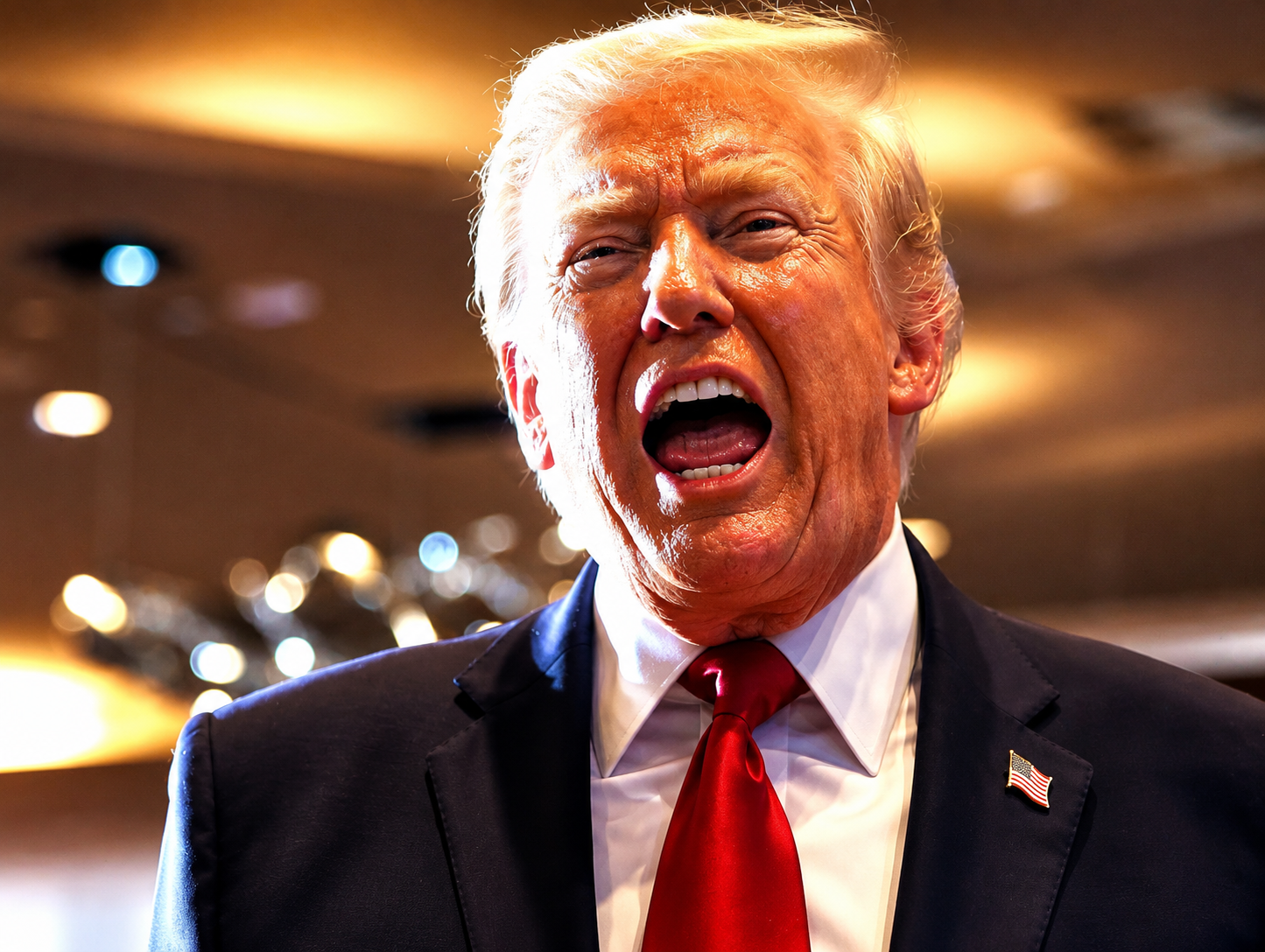
Donald Trump started his day with a shouty meltdown.
The president, 80, is preparing to launch a new wave of economic sanctions on Iran and its partners after almost six months of failing to crush the Middle Eastern country militarily.
“IRAN IS COMPLETELY COLLAPSING!!!” he screamed on Truth Social at 8.41 a.m. on Monday, which his Treasury Secretary has called “economic D-Day.”
Scott Bessent is expected to introduce new “secondary” sanctions on entities that do business with Iran, which a source told Reuters was hoped to suffocate Tehran’s economy.
Bessent on Sunday wrote an op ed in the Financial Times saying that, “President Donald Trump and the overwhelming might of our military have significantly dismantled Iran’s military capabilities and weakened its nuclear program. Now we are entering the endgame. At dawn begins an economic D-Day—the single greatest financial offensive ever marshaled against an adversary.”
Making his threat, Bessent added, “In short, these countries calculate appeasement of the regime to be the safer course. But they would do well to consider the consequences of sustaining it… The alternative for those who tether themselves to Tehran is the foreclosure of any path to lasting prosperity.
The administration is seeking to pressure countries supporting Iran into cutting ties with Tehran, hoping the move will help bring the conflict to an end. The effort comes as the war continues to carry significant financial and political costs for the United States. President Trump entered office promising to reduce U.S. involvement in foreign interventions, yet the conflict in the Middle East has already cost at least $37.5 billion and claimed the lives of 18 Americans.
The prolonged deployment has also placed significant strain on U.S. service members aboard the USS Abraham Lincoln. They have reportedly faced difficult conditions during a deployment lasting more than 250 days, with the crew involved in the conflict since bombing began on February 28. At the same time, concerns have grown over U.S. munitions supplies, particularly costly strike weapons and air-defense interceptors. While the Center for Strategic and International Studies has said current supplies are not expected to be exhausted during the conflict, prolonged use could affect America’s ability to respond effectively in future wars.
Political pressure to end the war is also increasing as the midterm elections approach. The economy remains a major concern for voters, while polling indicates that Americans have become increasingly dissatisfied with Trump’s economic record. For the first time in nearly a decade, Democrats are favored over Republicans to handle the economy, raising concerns within the GOP that the midterms could become a referendum on Trump and cost the party congressional seats.
The conflict with Iran is adding to those concerns. In addition to the enormous spending on military operations and weapons, the closure of the Strait of Hormuz has contributed to higher gas prices and could create further costs as fertilizer shipments face delays. Together, those pressures are adding to an affordability crisis at home and increasing the political stakes surrounding the war.

Prakash Kumar is a seasoned journalist and storyteller with 12 years of experience creating clear, engaging news content for digital audiences. His reporting spans automobile launches, emerging technology, consumer gadgets, health and diet tips, and everyday lifestyle trends. Known for turning complex information into useful, reader-friendly stories, Prakash combines careful research with a sharp editorial eye. He follows industry developments closely, interviews experts, and delivers timely articles that help readers make informed choices. Whether covering a new car, a smart device, or practical nutrition advice, Prakash brings accuracy, curiosity, and approachable writing to every story he publishes for news readers.